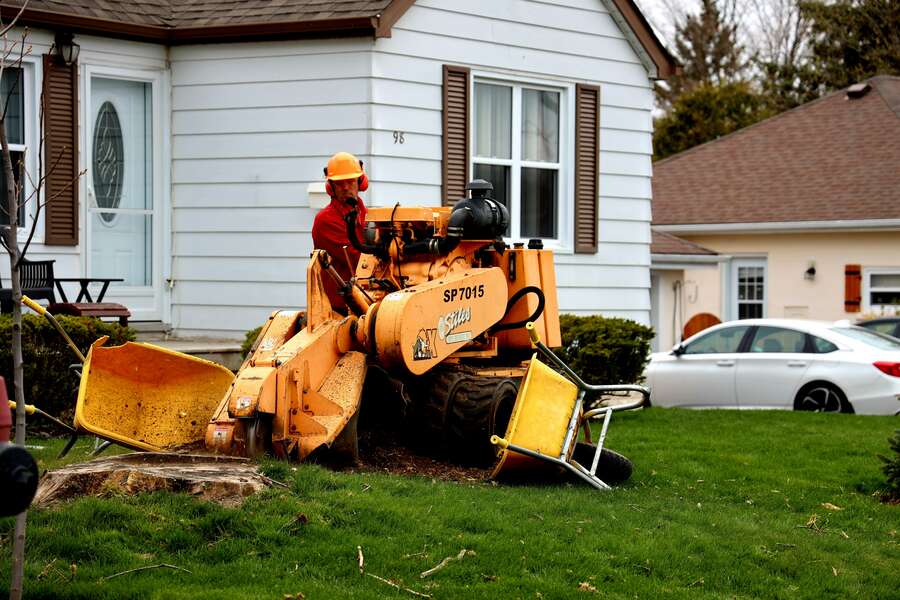
When stump grinding makes sense
Stump grinding usually follows tree removal — either right after, or as a separate visit when the homeowner has decided what they want the area to become. Common reasons include eliminating a trip hazard, freeing up space for a fence line or planting bed, reducing pest harborage, preparing a spot for new sod or pavers, and stopping repeated suckering from cottonwood and aspen stumps.
Cottonwood and aspen are particularly prone to resprouting from stumps and surface roots. Grinding below grade and addressing surface roots can reduce regrowth, though some species may still send up shoots that need a follow-up cleanup.
What the estimate should include
A stump grinding estimate should cover the stump diameter, grinding depth, surface root grinding (yes/no), how much chip material will remain on site, and access through fences and side yards. Some homeowners want all the chips and grindings hauled away; others use them as mulch elsewhere on the property. The grinder leaves a mounded mix of chip and soil that settles over time.
The estimate should also clarify whether the area will be ready for sod, replanting, or hardscape after grinding. Grinding alone leaves wood chips and partial root material; full soil prep for replanting is usually a separate step.
Stump grinding cost factors
Cost depends on stump diameter, grinding depth, species (cottonwood and aspen often need deeper grinding plus surface root work), access through gates and side yards, and whether multiple stumps are being ground on the same visit. Stumps with rocks, buried debris, or extensive surface roots take longer and may add to the price.
Chip and grinding cleanup, surface root grinding extending beyond the trunk, and follow-up sucker control on cottonwood or aspen can also affect the estimate. A useful estimate after seeing the stump is more accurate than any phone quote.
Process and finish options
Stump grinding uses a wheeled grinder that chews the stump and visible roots into a chip-and-soil mix. Depth typically goes 6-12 inches below grade depending on the planned use. The crew should check for irrigation lines, gas or utility markings, sprinkler heads, and underground obstructions before grinding starts.
After grinding, the area can be left mounded as mulch, leveled with topsoil for sod or replanting, or fully cleaned out and backfilled. Cottonwood and aspen stumps may benefit from a follow-up visit or sucker treatment to manage regrowth from remaining root material.
Ready to schedule stump grinding?
Call with the stump location, approximate diameter, species if known, and what you plan to do with the area afterward.