Free estimates before work starts
Tree work changes quickly once access, height, decay, and nearby structures are checked. Start with a clear estimate before scheduling removal, trimming, stump grinding, or emergency response.
Idaho Falls tree removal, trimming, stumps, and emergencies
Need a tree removed, trimmed, or checked after a storm? Call for a free estimate from local Idaho Falls tree service, including emergency tree removal, stump grinding, and snow- and wind-damage cleanup.
Mon-Sat 7am-7pm. 24/7 emergency calls.
Licensed & Insured
Service provider
Your request has been received for review. Service availability, pricing and an appointment time still need confirmation. If you need to update your request, call the number below.
Call (208) 497-5507For emergencies, call (208) 497-5507.
Tree work in Idaho Falls is shaped by the Snake River Plain — cold winters, late frost, dry summers, and heavy seasonal snow load. Mature cottonwoods along the river corridor, blue spruce in older neighborhoods, quaking aspen in suburban yards, and aging ash trees that may need preventive attention as emerald ash borer moves closer to the state all create different removal and pruning concerns. Add wind events, ice damage, side-yard access through fences and outbuildings, and overhead service drops, and the safest first step is a careful estimate.
Idaho Falls Tree Service connects local homeowners with tree service quickly. One clear phone number, a short quote form, and pages focused on the work most often needed across Bonneville and Jefferson counties. If a tree is dead, dangerous, blocking access, damaging a roof, dropping limbs, leaning against a fence, or leaving a stump behind, you should be able to request help without digging through directories.
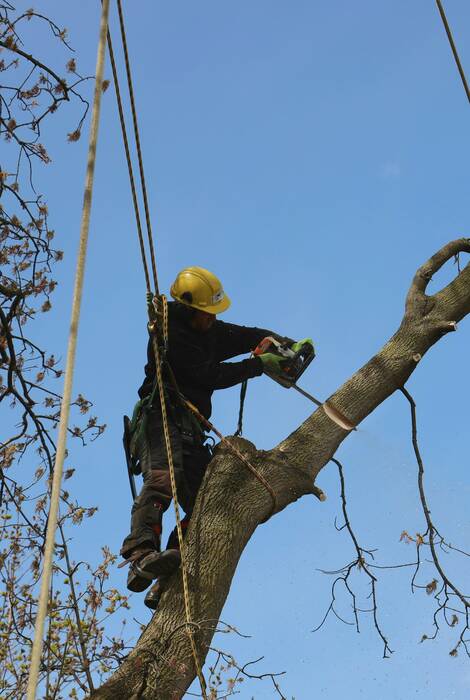
The most common calls are tree removal, tree trimming, stump grinding, and urgent storm cleanup. Each job starts with the same practical questions: how big is the tree, what is it near, how stable is it, can equipment reach it through gates and side yards, and what cleanup needs to happen afterward?
Removal for dead, leaning, storm-damaged, or unwanted trees near homes, driveways, fences, and service drops.
24/7 response for trees down on a roof, driveway, fence, or utility line after wind, ice, or heavy snow events.
Urgent assessment when a tree or limb has landed on a roof, attached structure, or vehicle — safety first, insurance documentation, and removal.
Pruning for canopy clearance, deadwood removal, snow-load reduction, and structural shaping on cottonwood, aspen, blue spruce, and other Eastern Idaho species.
Grinding stumps below grade after removal so the area can be replanted, mulched, or finished with sod or hardscape.
Removal is usually the right conversation when a tree is dead, split, leaning toward a structure, dropping large limbs, crowding a foundation, or creating repeat storm risk. Idaho Falls homeowners often call about mature cottonwoods near the Snake River corridor with decay or trunk cracks, blue spruce that have outgrown a side yard, aspen suckers spreading into a lawn, or ash trees a homeowner wants to remove proactively before emerald ash borer reaches Idaho.
A removal estimate should cover access through gates and outbuildings, rigging needs, whether limbs can be lowered safely, how close the tree is to a home or service drop, whether the stump should be ground, and whether debris should be hauled away. Firm prices without seeing the tree can miss the exact risks that drive the job.
Cost factors usually include tree height, trunk diameter, canopy spread, backyard or side-yard access, proximity to roofs and overhead lines, dead or brittle wood, stump grinding, and debris haul-away. A small open-area removal is very different from a large cottonwood over a fence or a blue spruce wedged between two houses.
If anyone is hurt or trapped, call 911 first. If a tree or limb is touching power lines, contact your utility (Idaho Falls Power for most of the city, Rocky Mountain Power in surrounding service areas) before calling a tree service.
Tree work changes quickly once access, height, decay, and nearby structures are checked. Start with a clear estimate before scheduling removal, trimming, stump grinding, or emergency response.
Downed trees, cracked limbs, blocked driveways, and trees touching a roof need faster triage than routine pruning. Emergency requests are routed for rapid callback.
Tree removal can involve rigging, ladders, saws, falling limbs, walls, roofs, and utility service drops. The site is built around licensed and insured service expectations and City of Idaho Falls tree-contractor standards.
Cold winters, late frosts, dry summers, heavy snow load, mature cottonwood and blue spruce, and a growing watch on emerald ash borer all change how a tree should be assessed in the Snake River Plain.
Tree trimming in Idaho Falls should do more than make a tree look tidy. Good pruning reduces deadwood, improves clearance from roofs and gutters, keeps limbs off driveways and sidewalks, and lowers the chance that wind, ice, or heavy snow turns a weak limb into a cleanup problem. Late winter is generally the best window for cottonwood and aspen pruning before spring growth; over-thinning during summer drought can stress the tree, so the best estimate considers species, season, canopy condition, and reason for trimming.
Common requests include raising low limbs, clearing branches from roofs, removing dead or rubbing limbs, reducing weight on long branches before snow load, shaping young trees, and cleaning up wind or ice damage. If the tree is already split, hollow, heavily leaning, or dropping large limbs, the estimate may shift from trimming to removal for safety.
Eastern Idaho weather brings a mix of wind events, late frost, freezing rain, and heavy wet snow. The National Weather Service forecast office in Pocatello covers Idaho Falls and the surrounding Snake River Plain, and after these events common calls include split trunks, hanging limbs, partially uprooted trees, blocked driveways, and branches pressing into roofs, fences, or service drops.
For storm and snow-load damage, take photos from a safe distance before cleanup if insurance may be involved. A useful estimate should separate removal, trimming, haul-away, stump grinding, and emergency access work so the scope is clear. If anyone is hurt, trapped, or power lines are involved, call emergency services or your utility before requesting tree work.
Service covers Idaho Falls and the surrounding communities. Ammon, Iona, Ucon, Shelley, Rigby, Rexburg, and Blackfoot all have different lot sizes, tree ages, and storm exposure — choose your area below for service details.